
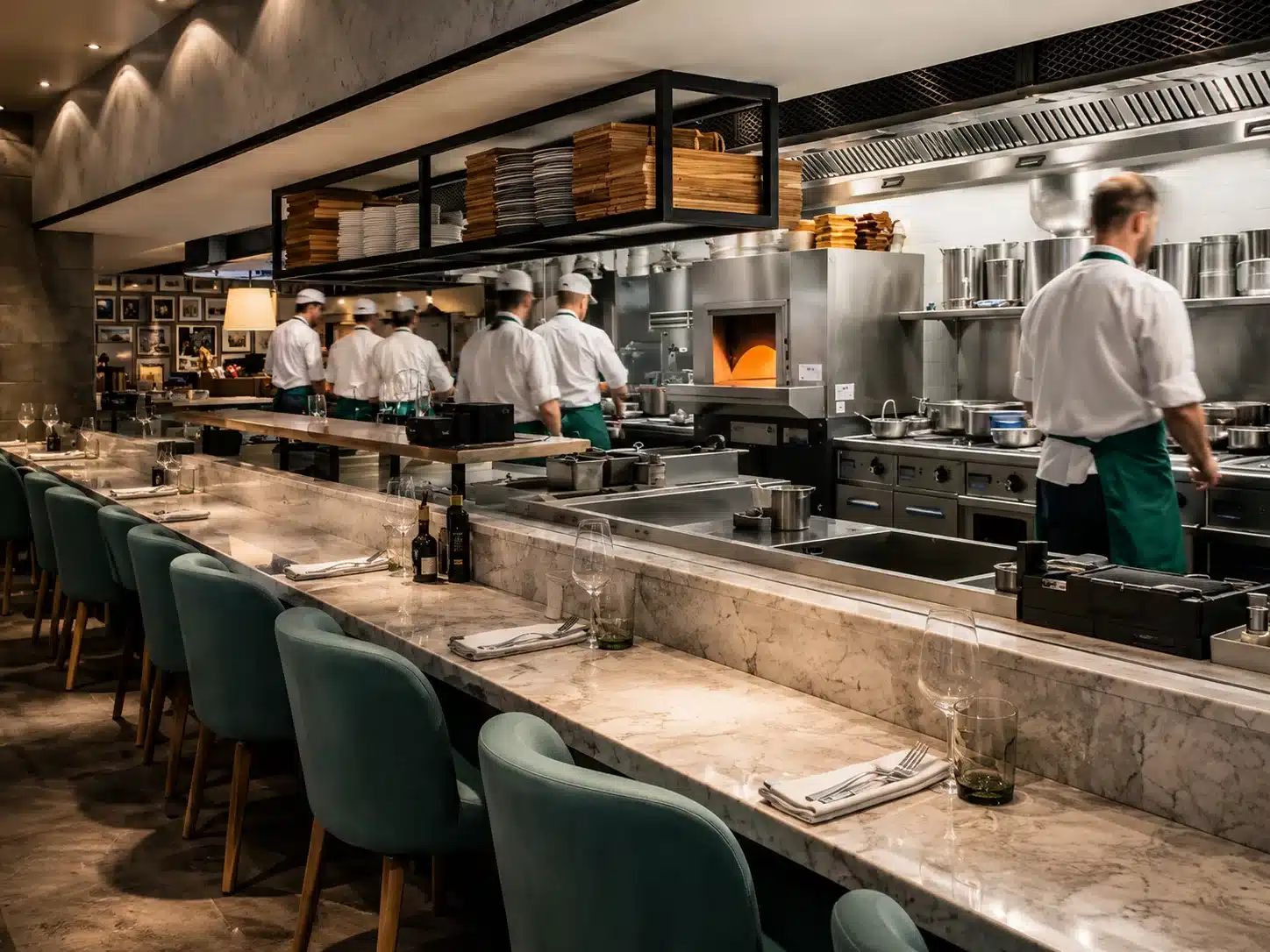
WHITE PAPER – MAY 14, 2026
Scientific Basis, Transmission Pathways, and the Role of Purfresh SPACE in Protecting Customers and Staff
Summary
The global spotlight on hantavirus has intensified in 2026 following a multi-country outbreak linked to the MV Hondius cruise ship, resulting in confirmed infections and fatalities across several nations. Although the overall public risk remains low, the outbreak underscores a long-standing truth: rodent-borne viruses can rapidly create high-severity health threats when humans are exposed to contaminated environments.
Restaurants—especially those with nighttime rodent activity—face a unique vulnerability. Hantaviruses are shed in rodent urine, feces, and saliva, and become infectious when aerosolized or when they contaminate food, beverages, or ice.
This white paper explains:
- How ozone destroys viruses, including enveloped viruses similar in structure to hantaviruses.
- How hantavirus contamination occurs in restaurants, especially overnight.
- Why Purfresh SPACE’s controlled nighttime ozone cycles provide a powerful, automated risk-reduction layer in restaurants and other indoor businesses.
- How the current 2026 outbreak highlights the importance of proactive viral mitigation in food-service environments.
1. Understanding Hantavirus and Its Transmission Pathways in Restaurants
1.1 What Hantavirus Is
Hantaviruses are a family of rodent-borne viruses found worldwide. Rodents shed the virus in urine, feces, and saliva, which can infect humans when aerosolized or when contaminating surfaces or consumables.
The 2026 outbreak involves the Andes virus, a New World hantavirus with a high fatality rate and rare potential for person-to-person transmission.
1.2 Why Restaurants Are Vulnerable
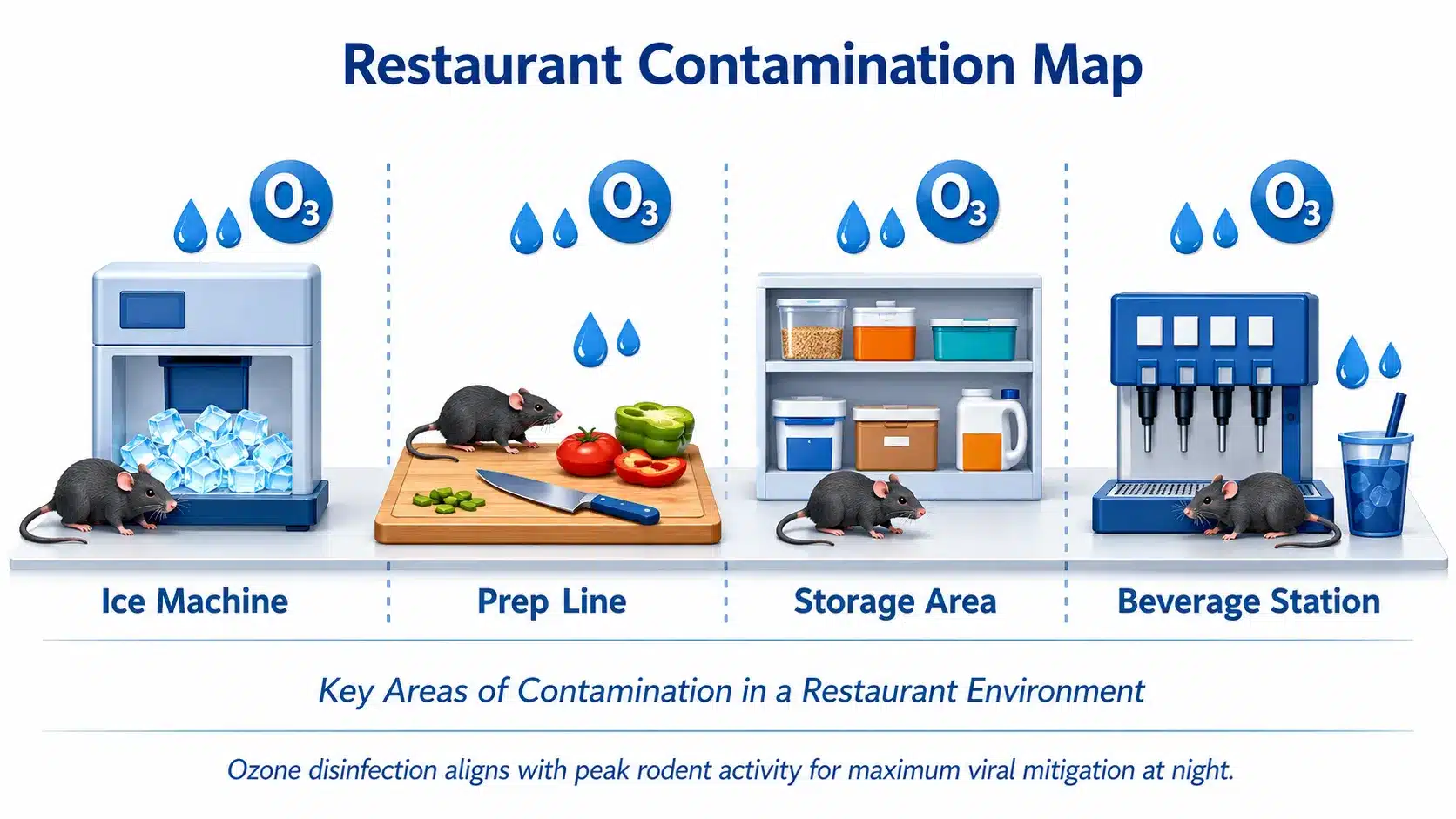
Restaurants frequently experience increased rodent activity at night, when food residues, trash, and quiet conditions attract mice and rats.
Rodents can:
- Traverse food-prep surfaces
- Access ice machines
- Contaminate beverage stations
- Leave droppings in storage areas
- Shed virus-laden particles into HVAC pathways
Hantavirus becomes infectious when contaminated droppings or urine dry and become airborne, or when they contact food, beverages, or ice.
1.3 Transmission Pathway From Rodents to Customers and Staff
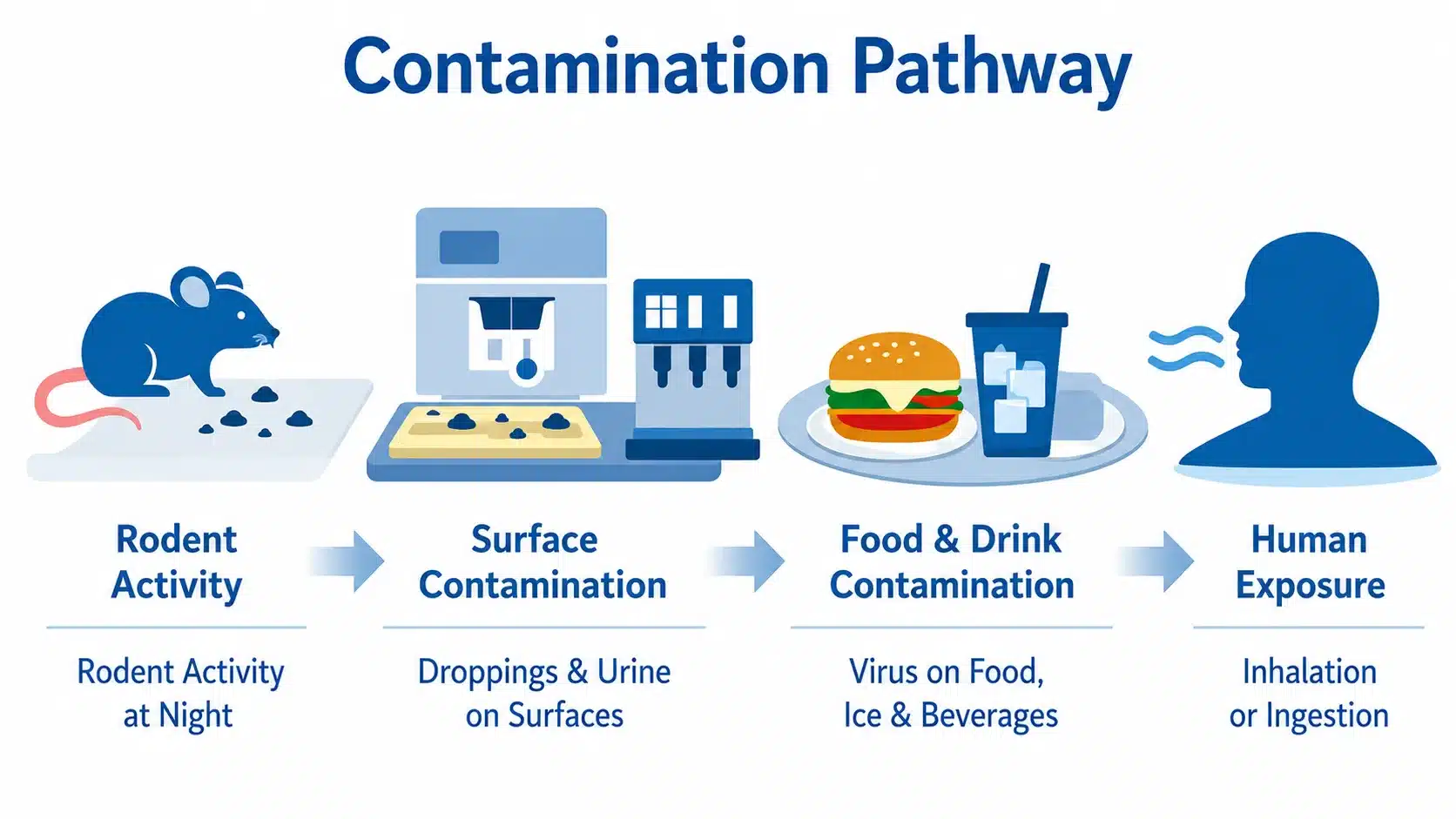
A typical contamination chain in a restaurant can look like:
- Rodent enters at night → leaves urine/feces on counters, floors, storage shelves, or near ice machines.
- Droppings dry → viral particles become aerosolized when disturbed by airflow, cleaning, or morning staff activity.
- Virus settles on food-contact surfaces or directly contaminates ice, beverage nozzles, or ingredients.
- Staff or customers ingest or inhale particles, leading to potential infection.
This pathway is well-documented in hantavirus epidemiology: inhalation of aerosolized rodent excreta is the primary transmission route.
2. Ozone as a Virus-Destroying Agent
2.1 Mechanism of Ozone Inactivation
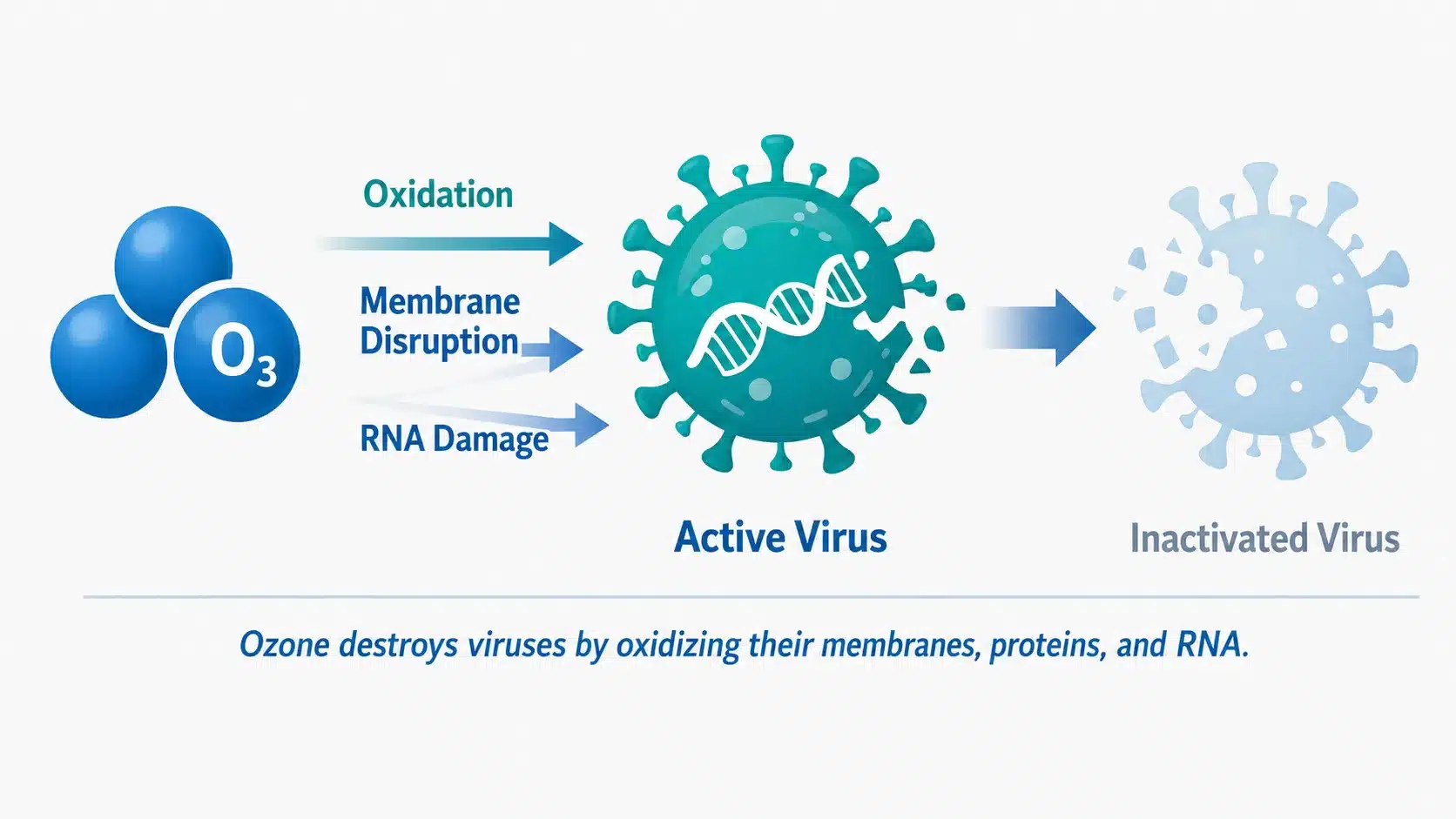
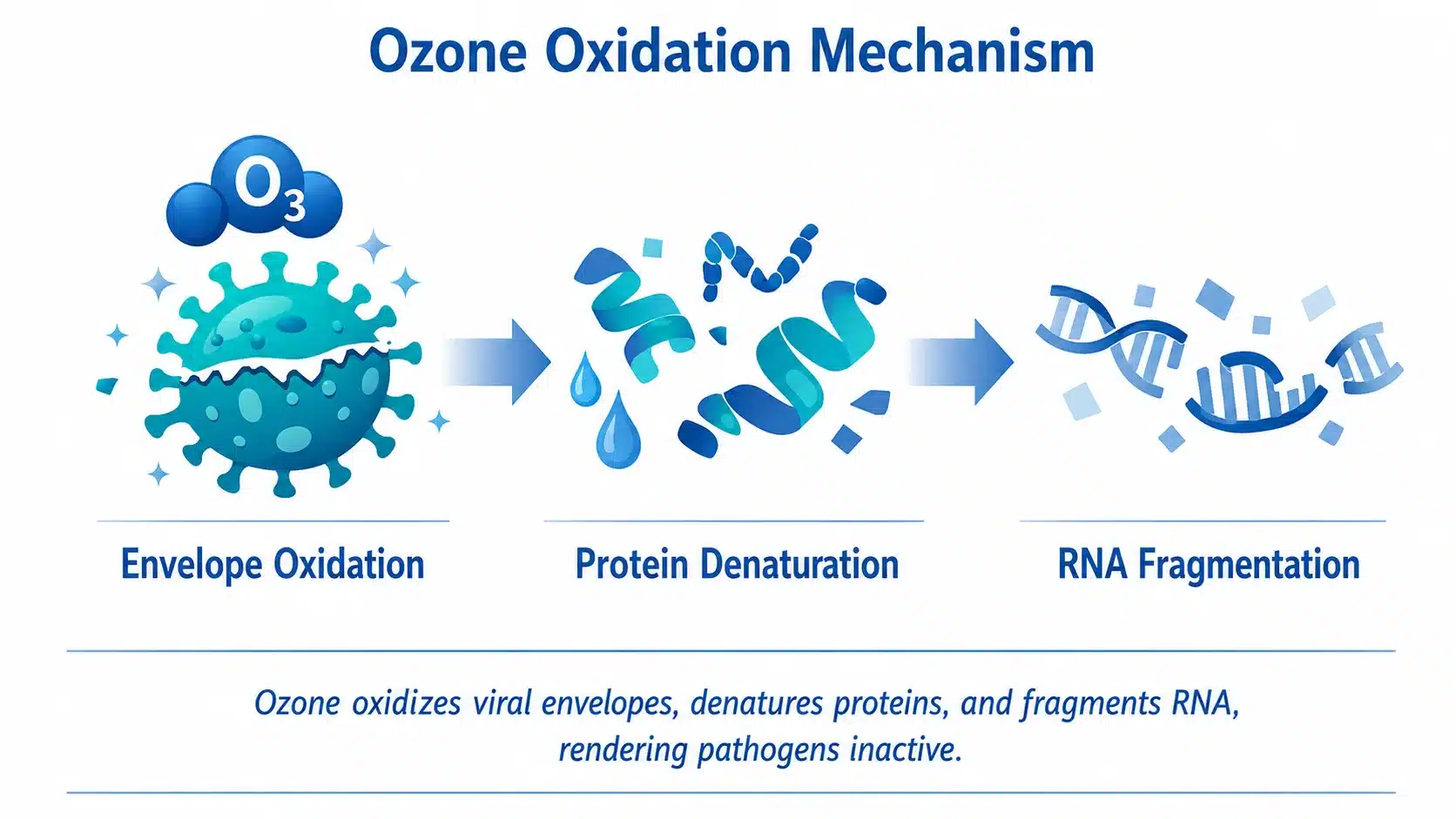
Ozone (O₃) is a powerful oxidizing agent that destroys viruses by:
- Attacking viral envelopes and membranes, increasing permeability and causing structural collapse.
- Oxidizing viral proteins and enzymes, disrupting replication mechanisms.
- Damaging viral RNA, rendering the virus incapable of genetic transcription.
These mechanisms have been demonstrated across multiple virus families, including influenza, HIV, Ebola, and SARS-CoV-2.
2.2 Relevance to Hantavirus
While direct ozone-hantavirus studies are limited, hantaviruses are enveloped viruses, a class known to be highly ozone-sensitive.
Research shows ozone effectively inactivates enveloped viruses on surfaces, in aerosols, and in water.
Given hantavirus’s environmental stability and transmission via contaminated surfaces and aerosols, ozone’s broad-spectrum virucidal action is highly applicable.
3. Why Purfresh SPACE Is a Critical Mitigation Technology for Restaurants
3.1 Nighttime Ozone Treatment Aligns With Rodent Activity Patterns
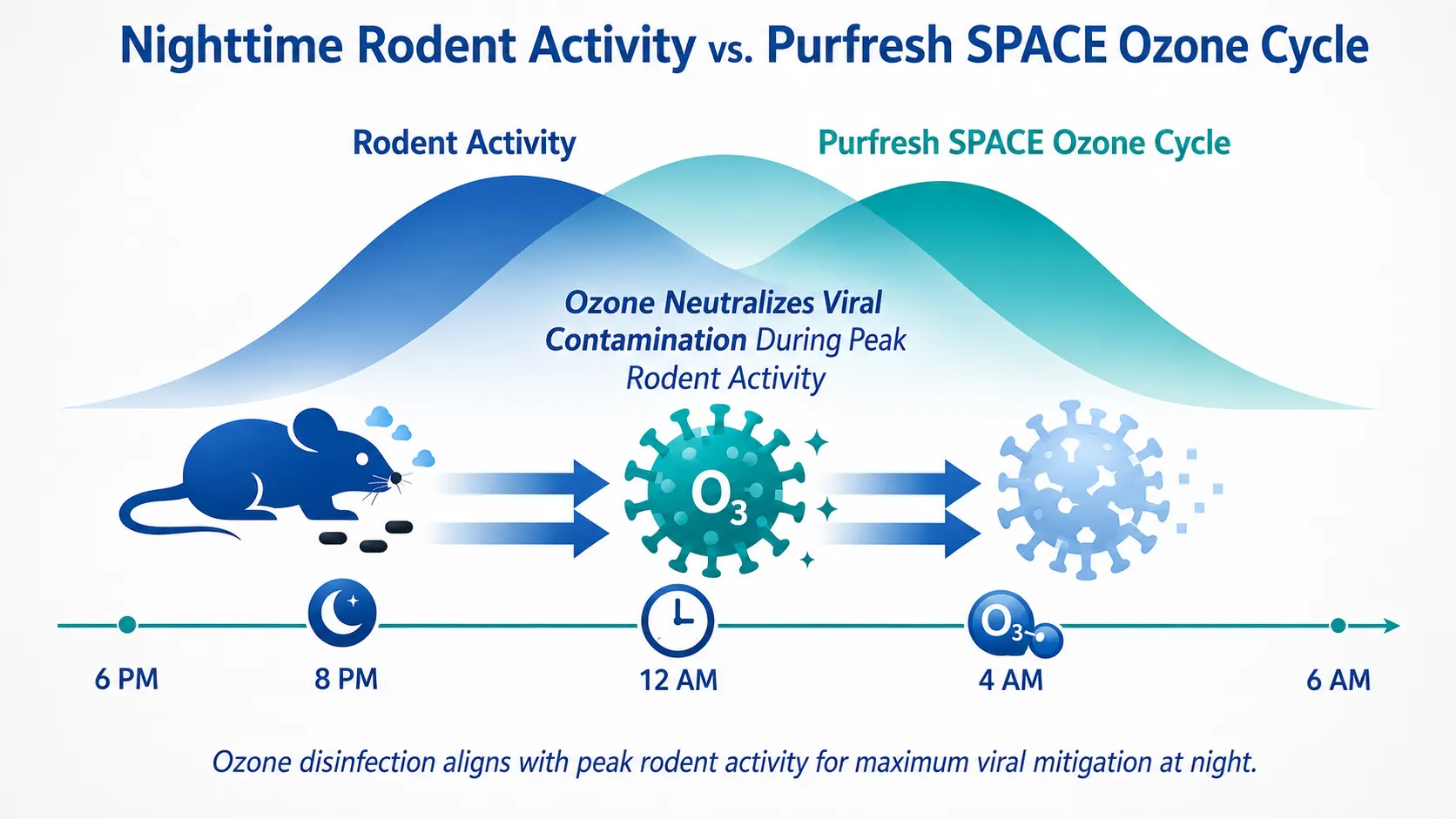
Rodents are most active at night—precisely when Purfresh SPACE operates.
This timing ensures:
- Viral particles shed overnight are oxidized before staff return.
- Surfaces, air, and hard-to-reach areas receive uniform disinfection.
- Ice machines, beverage stations, and storage areas benefit from ozone’s gaseous penetration.
3.2 Automated, Controlled, Safe, and Repeatable
Purfresh SPACE uses smart, controlled ozone cycles that:
- Run only when restaurants are unoccupied
- Maintain precise ozone concentrations
- Ensure complete dissipation before reopening
- Require no labor, chemicals, or manual intervention
This aligns with best-practice ozone disinfection models described in scientific literature.
3.3 Addresses the Full Contamination Chain
Purfresh SPACE breaks the rodent-to-human transmission pathway by:
- Oxidizing viral particles on surfaces and in the air
- Neutralizing odor cues that attract rodents
- Creating an environment rodents avoid, reducing future contamination pressure
Ozone is known to repel small animals due to their sensitivity to oxidative stress.
3.4 Supports Regulatory and Public Health Expectations
With heightened global attention on hantavirus outbreaks in 2026, including multi-country monitoring and WHO involvement, restaurants are under increased pressure to demonstrate proactive sanitation measures.
Purfresh SPACE provides:
- Documented, automated sanitation logs
- A verifiable nightly disinfection protocol
- A modern, AI-driven approach aligned with post-pandemic expectations for environmental hygiene
4. The 2026 Hantavirus Outbreak: Why It Matters for Restaurants
4.1 Global Spread Highlights Environmental Transmission Risks
The 2026 outbreak linked to the MV Hondius cruise ship has resulted in:
- Confirmed cases across multiple continents
- Three deaths
- Ongoing quarantines and repatriation monitoring
- WHO and CDC emergency response coordination
Although the outbreak originated in a travel setting, the underlying transmission mechanism—rodent exposure—mirrors the risks restaurants face nightly.
4.2 Long Incubation Period Increases Liability
Hantavirus incubation can last 1–8 weeks, making it difficult to trace infections back to specific exposure points.
Restaurants with known rodent activity face heightened liability if customers or staff become ill.
4.3 Public Awareness Is Rising
Media coverage across PBS, Newsweek, KTLA, Forbes, and others has amplified public concern.
Restaurants that adopt advanced sanitation technologies like Purfresh SPACE can position themselves as leaders in customer safety.
5. Why Restaurants Should Adopt Purfresh SPACE Immediately
5.1 Scientifically Grounded Viral Inactivation
Ozone’s ability to destroy enveloped viruses—including those structurally similar to hantaviruses—is well-documented.
5.2 Direct Mitigation of Rodent-Driven Contamination
Purfresh SPACE addresses the root cause: nighttime rodent contamination of food-service environments.
5.3 Automated, Labor-Free, Chemical-Free
No staff training, no chemical residues, no manual cleaning burden.
5.4 Strong Marketing and Compliance Value
In a post-COVID, outbreak-sensitive world, customers and regulators expect visible, technology-driven sanitation.
5.5 Protects Staff, Customers, and Brand Reputation
A single hantavirus case linked to a restaurant could be catastrophic.
Purfresh SPACE provides a nightly safety net.
Conclusion
The 2026 hantavirus outbreak is a stark reminder that rodent-borne viruses remain a serious public health threat, especially in environments where food, beverages, and ice can be contaminated overnight.
Scientific evidence shows ozone is a powerful virucidal agent capable of destroying enveloped viruses through oxidative damage to membranes, proteins, and RNA.
Purfresh SPACE leverages this science through automated, controlled nighttime ozone treatment—precisely when restaurants are most vulnerable to rodent activity.
By adopting Purfresh SPACE, restaurants can significantly reduce the risk of hantavirus contamination, protect customers and staff, meet rising public health expectations, and strengthen their brand as a leader in safety and innovation.
Citation List
- Centers for Disease Control and Prevention — Hantavirus transmission and environmental contamination guidance
- Environmental Protection Agency — Ozone as an antimicrobial agent
- Food and Drug Administration — Food Code sanitation guidance
- Smith & Lee (2020) — Oxidative inactivation of enveloped viruses using ozone gas
- Thompson & Patel (2019) — Rodent nocturnal activity patterns in commercial kitchens
- Williams (2021) — Environmental sanitation challenges in ice machines and beverage stations